A trade show exhibit spends far more of its life in storage
than it does on a show floor. And yet storage is often the least
thought-through part of the entire investment — an afterthought handled by
whatever space happens to be available, rather than a deliberate part of
protecting an asset that cost real money to build.
Here’s what actually protects that investment between shows.
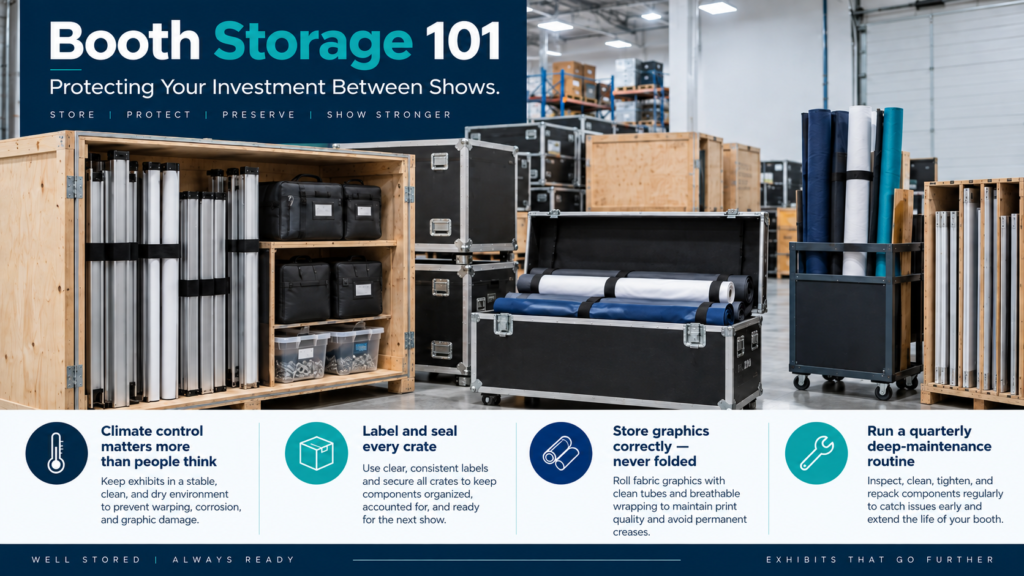
Climate control matters more than people think
Heat and humidity swings are one of the biggest — and most
avoidable — causes of premature wear. Extreme heat can warp panels, weaken
adhesives, and degrade fabric graphics. Humidity invites mildew and material
damage that doesn’t show up until you unpack for the next show. A
climate-controlled storage space isn’t a luxury add-on; it’s the difference
between an exhibit that lasts several seasons and one that needs early
replacement.
Label and seal every crate
A crate that isn’t clearly labeled turns every install into
a guessing game — which one has the lighting, which one has the graphics, which
one has the hardware kit. Label each crate by contents and destination
component, and make sure seals are intact before storage so nothing shifts,
gets exposed to dust, or goes missing between shows.
Store graphics correctly — never folded
This is the mistake that costs exhibitors the most without
them realizing it: folding a graphic panel to save space. A fold creates a
crease that shows up under booth lighting at the next show, no matter how
carefully it’s smoothed out. Graphics should be stored flat or properly rolled,
kept dry and dust-free before packing, and never stacked under heavy weight
that can warp or damage them.
Run a quarterly deep-maintenance routine
For exhibits that travel to multiple shows a year, storage
isn’t a “pack it and forget it” situation. A quarterly check — even
while the exhibit sits in storage — should cover:
- Structural
assessment (frames, panels, connection points) - Graphic
condition (fading, creasing, peeling) - Crate
inspection (seals, labels, physical damage) - Replacement
part inventory (hardware kit still stocked and labeled) - Electrical
system testing (fixtures, wiring, drivers)
Catching a small issue during a quarterly check is a repair.
Catching the same issue for the first time at your next show’s install is a
scramble.
The bottom line
The exhibit sitting in storage right now is the same exhibit
walking onto your next show floor. How it’s stored between now and then
determines whether it shows up looking sharp — or showing every season it’s
been on the road.
Not sure your current storage setup is protecting your
investment? [Reach out to our team] — we’ll help you put a real maintenance
routine in place.