The show ends, the aisles empty out, and the teardown crew starts breaking down the booth. At that point, most teams mentally check out — the show’s over, the work is done. That’s exactly the moment the most valuable 20 minutes of the entire trip gets skipped.
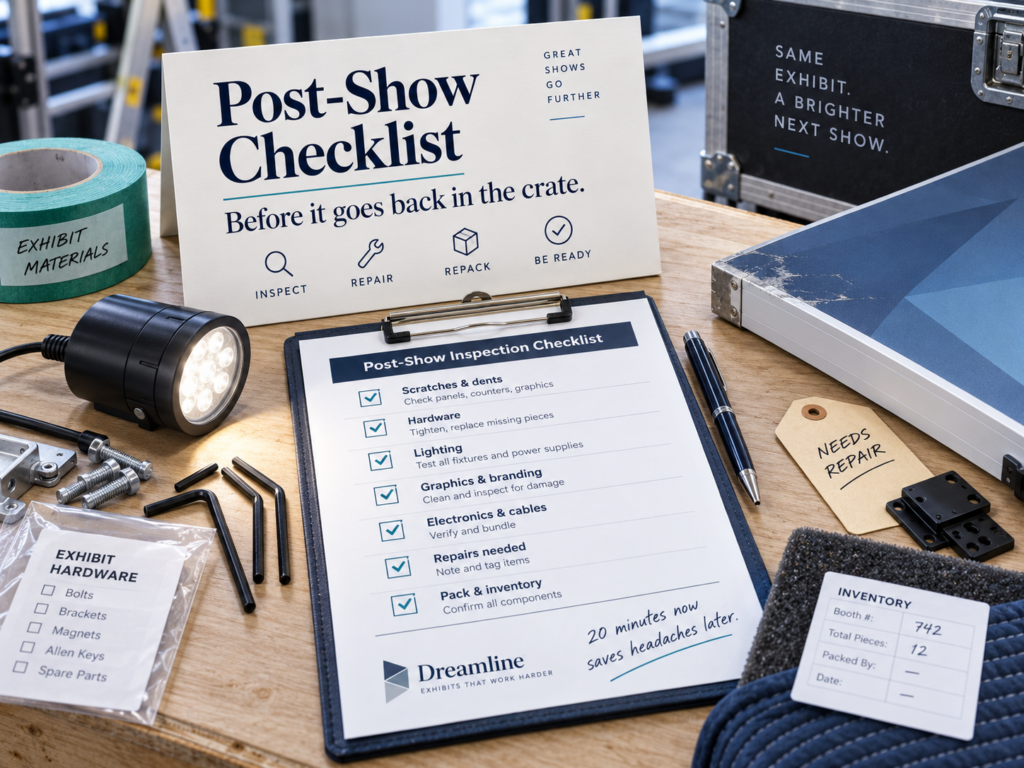
What happens (or doesn’t happen) right after teardown determines whether your exhibit shows up to the next event ready to go, or arrives with a surprise nobody caught in time. Here’s the checklist worth running before it goes back in the crate.
Scan for scratches and dents
Walk every panel, counter, and structural surface while the damage is fresh and easy to spot. A scuff that happened during this show’s setup or teardown is far easier to identify — and far cheaper to fix — than one discovered months later at the next show’s install, when it’s too late to do anything but work around it.
Check every piece of hardware
Bolts, hinges, latches, magnets, and locking mechanisms take real wear from a single setup-and-teardown cycle, let alone a full season of shows. Give everything a physical check — not just a glance — while you have the tools and the time to tighten or replace what’s loosened.
Test the lighting
Turn on every fixture one more time before it’s packed. A flickering light or a dead driver is a five-minute fix at your shop. It’s a scramble — or a dark corner of your booth — if it’s discovered for the first time at the next show’s install.
Note repairs needed before the next show
This is the step almost everyone skips: writing it down. A verbal “we should fix that” between two team members rarely survives the drive home, let alone the weeks until the next show. A simple written note — what’s damaged, what needs replacing, what to flag for the next inspection — is what actually gets acted on.
What skipping this costs you
None of this feels urgent right after a show, when everyone’s tired and ready to go home. But skipping it doesn’t make the wear disappear — it just moves the discovery to the worst possible moment: mid-install at your next event, with a deadline and no time to fix it properly.
The bottom line
The post-show checklist takes 20 minutes. The alternative is discovering the same problems later, under worse conditions, with less time and higher stakes. Veteran exhibitors don’t skip this step — they treat it as part of the show, not an afterthought after it.
Want a system for tracking your exhibit’s condition between shows? [Reach out to our team] — we’ll help you build a maintenance routine that actually gets followed.